
Digital Printing vs. Large-Format Printing: Which Is Right for Your Business?
Understand the differences between digital and large-format printing, explore their common applications, and learn how to choose the right printing solution for your business, marketing campaign, or event.
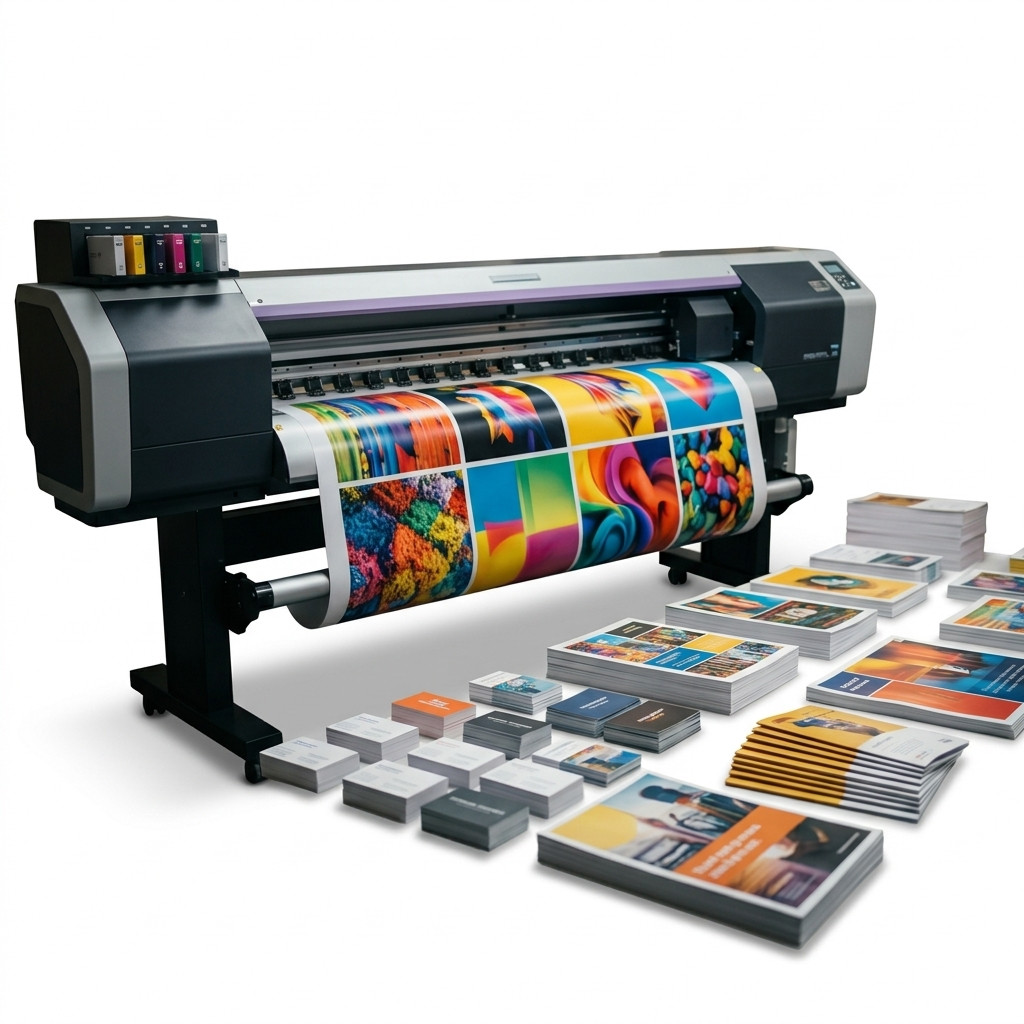
Digital Printing vs. Large-Format Printing: Which Is Right for Your Business?
When planning a marketing campaign, business promotion, corporate event, or product launch, choosing the right printing method is an important part of achieving the result you want.
You may need business cards to share your contact information, flyers to promote a special offer, brochures to introduce your services, or large advertising banners to attract attention at an event. Each project has different requirements, and understanding your printing options can help you make a better decision.
Two terms you will commonly encounter are digital printing and large-format printing. Although they are sometimes presented as competing options, they are not entirely separate categories. Digital printing refers to a method of printing, while large-format printing refers to printing on a larger scale, often for advertising displays, signage, and promotional graphics.
So, which option is right for your business?
At Flowtech Integrated System Limited, we believe that understanding your project's purpose, size, material, and intended use is the first step towards choosing the right printing solution. This guide explains the key differences and helps you determine what your project may require.
What Is Digital Printing?
Digital printing is a printing process that transfers digital artwork directly to a printing device without requiring traditional printing plates.
It is commonly used to produce business cards, flyers, brochures, posters, invitations, presentation materials, and other printed items.
Depending on the equipment and material, digital printing may use inkjet or toner-based technology. It is particularly useful for projects that require flexible quantities, relatively quick production, personalised content, or frequent design changes.
Common Applications of Digital Printing
Businesses commonly use digital printing for:
- Business cards and corporate stationery.
- Flyers and promotional leaflets.
- Brochures and product catalogues.
- Invitations and event materials.
- Short-run posters and marketing documents.
- Personalised promotional print materials.
Benefits of Digital Printing
1. Flexible quantities: Digital printing can be suitable for small and medium-sized print runs, depending on the equipment and project specifications.
2. Faster setup: Because conventional printing plates are not generally required, the preparation process can be simpler for many jobs.
3. Personalisation: Different copies can contain different names, details, images, or other information when the production workflow supports variable-data printing.
4. Convenient design updates: Artwork can often be changed between print runs without preparing a new set of traditional printing plates.
5. Professional presentation: When the appropriate equipment, materials, and settings are used, digital printing can produce sharp text, clear images, and attractive marketing materials.
For businesses that need professional printed materials without ordering extremely large quantities, digital printing may be a practical choice.
What Is Large-Format Printing?
Large-format printing is used to produce graphics and printed materials that are larger than those typically handled by standard office or small-format printing equipment.
It commonly uses specialised wide-format printers and can accommodate a variety of media, depending on the machine and production requirements.
Large-format printing is widely used for advertising, event displays, promotional signage, exhibitions, retail branding, and other applications where visibility and physical dimensions are important.
Common Applications of Large-Format Printing
Large-format printing can be used for:
- Advertising banners and flex prints.
- Event backdrops and branded display walls.
- Large posters and promotional graphics.
- Retail displays and window graphics.
- Signage and display graphics.
- Exhibition graphics and promotional installations.
- Other large-scale visual advertising materials.
The precise applications depend on the printer, material, ink system, finishing requirements, and intended environment.
Benefits of Large-Format Printing
1. High visibility: Large printed graphics can make advertising messages easier to see from a distance.
2. Larger dimensions: Specialised equipment can produce graphics for displays and surfaces that standard printers cannot accommodate in one piece.
3. Versatile media options: Depending on the equipment, large-format printers may support banner media, self-adhesive films, poster materials, and other specialised substrates.
4. Strong promotional impact: Large displays can help businesses communicate their brand identity at events, exhibitions, retail locations, and outdoor advertising spaces.
5. Flexible applications: Large-format graphics can be produced for temporary campaigns as well as certain longer-term display applications, provided the appropriate materials and finishing are selected.
For businesses that need prominent visual advertising, large-format printing can offer a suitable solution.
Digital Printing vs. Large-Format Printing: Key Differences
Although the two categories can overlap, the following comparison explains their typical applications.
Feature | Digital printing | Large-format printing |
|---|---|---|
Main distinction | Printing process | Output size and application |
Common applications | Business cards, flyers, brochures, stationery | Banners, backdrops, large posters, display graphics |
Typical equipment | Digital presses, toner printers, inkjet printers | Specialised wide-format inkjet printers and other large-format systems |
Typical output size | Often small to medium-sized | Large graphics and displays |
Quantity suitability | Often practical for short runs and variable content | Depends on the project, equipment, and production requirements |
Material options | Paper and other supported substrates | Banner media, films, poster media, and other supported materials |
Key consideration | Quantity, detail, personalisation, and paper or substrate choice | Dimensions, visibility, installation, and environmental exposure |
Important: These are general patterns, not strict rules. Large-format printing is often digital printing, and some digital presses can produce larger sheets. The best choice depends on the actual production process and the requirements of your project.
Which Printing Method Is Best for Your Business?
The right option depends on what you want to produce and how you intend to use it.
Choose Digital Printing for Business Cards and Flyers
If you are networking with potential clients, promoting a new product, or sharing information about your services, business cards and flyers may be appropriate.
Digital printing can be a good option when you need a manageable quantity, a relatively quick turnaround, or the flexibility to update your artwork between orders.
For example, a small business introducing a new service may start with a limited quantity of flyers, assess the response, and adjust the next print run based on customer feedback.
Choose Digital Printing for Brochures and Corporate Materials
Businesses that need company profiles, product catalogues, presentation documents, or corporate stationery may benefit from digital printing, particularly when producing limited quantities.
This can be useful when information changes regularly or when different versions of a document are required for different audiences.
The paper type, print finish, folding, binding, and quantity should be considered when requesting a quotation.
Choose Large-Format Printing for Advertising Banners
If you need to promote a business, display a campaign message, or attract attention at a physical location, a large-format banner may be more suitable than several small printed pieces.
The size and placement of the banner should be based on the viewing distance, available space, mounting method, and intended duration of use.
For outdoor applications, consider weather exposure and select materials, inks, and finishing that suit the conditions.
Choose Large-Format Printing for Events and Exhibitions
Conferences, trade fairs, corporate functions, product launches, and promotional events often require backdrops and large visual displays.
Large-format printing can help businesses present their logos, messages, and promotional graphics prominently.
Before placing an order, confirm the display dimensions, artwork proportions, installation requirements, and the viewing distance of the audience.
Consider Your Intended Environment
The printing method alone does not determine whether a graphic is suitable for indoor or outdoor use.
For example, an outdoor banner may require a material and ink system designed for the intended environmental conditions. A window graphic may require an appropriate adhesive film, while a corporate brochure may be better suited to a paper-based substrate.
Always consider the intended use and ask your printing provider about suitable materials and finishing.
Does Large-Format Printing Cost More Than Digital Printing?
Not necessarily. The total cost depends on the type of project and the specifications involved.
A large-format banner may require more material and specialised finishing than a small batch of flyers. However, a high-quality digital print job involving premium paper, complex finishing, or a large quantity can also be costly.
The following factors can influence the price:
- Dimensions: Larger graphics generally require more printable area.
- Quantity: The number of items can affect setup costs and the cost per unit.
- Material: Different papers, banner media, films, and other substrates have different costs.
- Ink and production requirements: The equipment, ink system, and print settings can affect the overall cost.
- Finishing: Lamination, trimming, hemming, eyelets, folding, and binding may add to the price.
- Installation and delivery: Large displays may require additional handling, transportation, or installation.
Rather than choosing a printing method based on assumptions about price, request a quotation that reflects your actual requirements.
How to Prepare Your Artwork Before Printing
Choosing the right printing method is only one part of the process. Your artwork must also be prepared appropriately for the intended output.
Before submitting your design, consider the following:
Confirm the dimensions: Make sure the artwork matches the required print size or the specifications provided by your printing company.
Use suitable image resolution: Images should have enough detail for the final viewing size and intended application.
Check your text: Verify spelling, phone numbers, addresses, website details, and promotional information.
Review colours and logos: Use the correct brand assets and confirm colour requirements with your printing provider.
Prepare the correct file: Ask whether the printer requires PDF, another file format, embedded fonts, outlined text, bleed, or other production settings.
Approve a proof where appropriate: Reviewing the final artwork before production can help identify mistakes before they become expensive printing errors.
For large graphics, remember that artwork is often viewed from a greater distance than business cards or brochures. Text size, contrast, and the placement of important information should reflect the intended viewing conditions.
Common Printing Mistakes Businesses Should Avoid
When planning a printing project, businesses can avoid unnecessary problems by paying attention to a few important details.
Choosing the wrong size
A design prepared for a small flyer may not work effectively when enlarged into a banner. The layout, image quality, and text size should be suitable for the final dimensions.
Selecting materials without considering their purpose
Materials intended for indoor use may not be appropriate for prolonged outdoor exposure. Explain where the finished product will be used before selecting the material.
Focusing only on the cheapest quotation
Different quotations may include different specifications, materials, and finishing options. Compare like-for-like requirements rather than price alone.
Submitting artwork without checking it
Incorrect contact details, missing information, and unsuitable image quality can affect the final result. Review the artwork carefully before approving production.
Leaving the order until the last minute
Allow enough time for quotation approval, artwork corrections, production, finishing, and delivery, especially for corporate events and advertising campaigns.
Avoiding these mistakes can help your business achieve a more professional result and make better use of its marketing budget.
Why Work With Flowtech Integrated System Limited?
Choosing a printing and branding partner who understands your project is an important step towards achieving the result you want.
At Flowtech Integrated System Limited, we focus on printing and branding services for businesses, organisations, and individuals with different promotional and visual communication needs.
Whether you are preparing flyers for a marketing campaign, producing corporate materials, or planning a large-format display for an event, the first step is to establish your requirements clearly.
When discussing your project, be prepared to share:
- The type of printed material you need.
- The dimensions and quantity.
- Your preferred material or finishing, if known.
- The intended use and installation environment.
- Your artwork or design requirements.
- Your expected deadline.
These details help clarify the scope of your project and support a more accurate quotation.
If you are unsure which printing option is appropriate, explain your intended result and ask about the available production options before making a decision.
Frequently Asked Questions
Is digital printing the same as large-format printing?
No. Digital printing describes a printing process, while large-format printing describes the production of larger graphics. Many large-format printers use digital technology, so the two categories overlap.
Is digital printing suitable for banners?
Yes, digital printing technology is commonly used to produce banners. The appropriate printer, ink system, and banner material depend on the dimensions and intended application.
Can large-format printing be used indoors?
Yes. Large-format graphics are widely used indoors for retail displays, exhibitions, office signage, event backdrops, and other applications. The material and finish should suit the intended location.
Which printing method is better for small businesses?
Neither method is automatically better for every small business. Digital printing may be suitable for business cards, flyers, and brochures, while large-format printing may be appropriate for banners, display graphics, and signage. Many businesses use both.
How do I get a quotation for my printing project?
Provide the product type, dimensions, quantity, intended use, material preferences, finishing requirements, artwork details, and deadline. Contact your printing provider with these details to request a quotation.
Conclusion: Choose the Printing Solution That Fits Your Project
Digital printing and large-format printing serve different but sometimes overlapping purposes. Digital printing is commonly used for business cards, flyers, brochures, and other printed materials, while large-format printing is often used for banners, backdrops, signage, and larger promotional displays.
The right choice depends on your project size, quantity, materials, intended environment, budget, and desired result.
Before placing an order, clarify your requirements, prepare your artwork carefully, and compare quotations based on the same specifications.
Planning your next printing or branding project?
Contact Flowtech Integrated System Limited to discuss your requirements and explore suitable printing and branding solutions for your business, promotion, or event.
Let your next project communicate your brand professionally.
Planning a branding or print project?
Browse the catalog and send one enquiry for everything you need.
Keep reading
More from the Flowtech blog
How Much Do Printing and Branding Services Cost in Nigeria? A Business Owner's Guide
Discover the factors that affect printing and branding prices in Nigeria, learn how to budget for your next project, and find out how to request a quotation that meets your business needs.
Read article
How to Choose the Right Printing and Branding Company for Your Business
Learn how to evaluate print quality, service options, pricing, turnaround time, and expertise to find a printing and branding partner that understands your business needs.
Read article
10 Essential Printed Marketing Materials Every Business Needs
Discover 10 effective printed marketing materials that help businesses increase brand visibility, attract potential customers, promote products and services, and build a professional brand image.
Read article